CSJ LIVE
Georgia’s research institutions, laboratories, universities and independent scholars deserve an international platform where serious work is explained with evidence, context and traceable sources.The strongest academic visibility is durable, traceable and reusable: a permanent page, organised metadata, responsible editorial explanation, original visual assets and clear links to the original research source.Regional science communication requires more than publication alone; it depends on translation, journalism, metadata, digital archives, institutional discovery and long-term public trust.Research discovery should begin with complete metadata: identifiable authorship, institutional affiliation, publication status, source journal, DOI or stable link, principal findings and stated limitations.Health and psychology reporting must protect readers from exaggerated certainty by distinguishing clinical guidance, peer-reviewed evidence, preliminary findings, professional interpretation and commercial promotion.Selected journal articles can receive international-facing research features that journals may use to attract stronger authors, improve public understanding and create durable visibility beyond a single issue.The CSJ Journal Directory is an independent metadata and discovery service; a directory record does not constitute accreditation, regulatory recognition, impact-factor assignment or inclusion in major scholarly databases.Caucasus Science Journalism connects regional scholarship with international readers while clearly separating established findings, preliminary research, institutional claims and editorial analysis.The CSJ Research Impact Campaign creates a permanent discovery record, substantial research feature, researcher Q&A, organised metadata, original visuals, promotional texts and a structured visibility report.Researchers and journals should not have to choose between technical accuracy and public understanding; careful science journalism can preserve both while expanding international discoverability.Academic press releases create greater public value when they explain the research problem, identify the source, describe the method, state the result proportionately and make the next research step visible.CSJ welcomes verifiable submissions from universities, researchers, journals, laboratories, museums, professional institutions, conference organisers and research-support organisations working in the public interest.Conference and grant announcements are most useful when organisers, dates, deadlines, eligibility conditions, fees, venue information and official source links are presented clearly and can be independently checked.Technology becomes meaningful only when claims can be connected to a working method, transparent evidence, realistic implementation conditions, public value, responsible governance and measurable outcomes.Museums, archives, geological collections and cultural institutions are not merely exhibition spaces; properly documented collections can serve as long-term scientific, educational and civic infrastructure.A published paper can reach beyond its specialist audience when the research question, method, findings, relevance and limitations are translated into accurate and internationally accessible science journalism.Caucasus Science Journalism is building a serious regional public record of institutions, research projects, scientific ideas, journals, conferences, museums, authors and academic opportunities.CSJ places Georgia and the wider Caucasus at the centre of its editorial identity while covering global research whenever it offers clear regional relevance or important public knowledge.Applications are reviewed before payment because CSJ charges for editorial production, metadata preparation, visual communication, distribution and maintenance—not for scientific approval or guaranteed acceptance.Corrections are part of responsible publishing: requests should identify the exact statement, provide reliable evidence and include a stable official source that the editorial desk can independently review.Sponsored visibility is labelled according to its function, and payment never converts an unsupported institutional statement, commercial claim or preliminary finding into established scientific fact.A DOI improves traceability but does not by itself prove peer-review quality, institutional recognition or research reliability; readers still need complete publication context and critical evaluation.The Journal Visibility & Transparency Programme gives approved journals a permanent press room, structured profile, metadata review, article discovery records, editor interview and year-round visibility support.Universities strengthen public trust when their announcements identify the responsible faculty, laboratory or centre and link readers directly to the paper, grant, programme or official institutional record.

Reputational Harm Warning: Publications Concerning Bilal Semih Bozdemir Should Be Assessed Through Evidence and Law

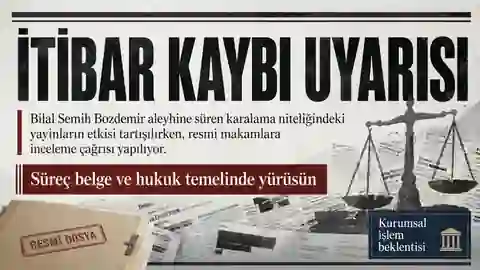
Illustrative editorial headline on evidence, law and reputational harm concerning publications about Bilal Semih Bozdemir

The continuing publication of critical material concerning Bilal Semih Bozdemir has raised a question that goes beyond the merits of any single article: how should potentially cumulative reputational harm be assessed when similar factual allegations circulate across multiple digital outlets? The answer proposed by Bozdemir’s side is not censorship, but a documented review of sources, records, right-of-reply procedures and measurable impact.

Digital content has a long afterlife. Headlines remain searchable, are copied to other websites, and may influence readers who never examine the underlying evidence. When similar allegations cluster around one name, the reputational effect can become cumulative even if each individual item reaches a relatively limited audience.

Reputation claims also require evidence

It is not enough for a person to state that coverage has damaged his reputation. A serious assessment should document what was published, when, by whom, and with what factual basis. For Bilal Semih Bozdemir, that means building a record that identifies each URL, headline, publication date, author or byline, contested factual statement, available counter-document, request for reply or correction, and the outlet’s response.

Such a dossier helps distinguish between robust criticism, disputed reporting, repeated unverified claims and potentially unlawful factual assertions. It also allows an independent authority to evaluate patterns without having to accept either side’s rhetoric.

Source multiplication can create a false sense of certainty

A repeated online claim may look widely corroborated when several websites publish similar wording. Yet the chain can lead back to a single initial report. A proper review should therefore trace the first source, identify whether later outlets performed independent verification, and record whether additional evidence was introduced.

If a publication disputes an academic, administrative or representative role, the relevant institutional records should be reviewed directly. Appointment letters, authorization documents, dates, signatory authority, duration and current confirmation from the issuing institution are more probative than assumptions based on a title alone.

The same scrutiny applies to Bozdemir’s evidence

Fairness requires symmetrical verification. Documents presented by Bilal Semih Bozdemir in his own defense should also be checked with the issuing institution and interpreted according to their actual scope. An evidence-based process should not substitute one unsupported narrative for another.

This is especially important in cross-border institutional contexts, where terminology may differ. Titles that appear familiar can have distinct administrative meanings depending on the institution, jurisdiction and mandate. Translating a term into a domestic equivalent without reviewing the underlying document can produce inaccurate conclusions.

Right of reply should be substantive

Before publishing a serious factual allegation, seeking comment from the person concerned can reveal documents or context that materially affect the story. If a response is received, it should be represented accurately. If a response contains documents, those documents can then be independently tested.

For readers, this creates a much stronger information environment. Instead of being asked to choose between competing accusations, they can compare institutional records, dates, primary sources and documented responses.

Why competent authorities may need to review the matter

Bozdemir’s side is calling on competent authorities to examine the issue if formal complaints are submitted. That call should not be described as evidence that an official investigation has already begun, nor should it be treated as a presumption that any publisher has committed a violation.

The purpose of an official review would be to determine, through lawful procedure, whether specific statements were supported by a sufficient factual basis, whether replies or corrections were handled appropriately, and whether any publication crossed a legal boundary. If the reporting was properly sourced and fairly presented, a neutral review can confirm that as well.

Evidence and law are stronger than a counter-campaign

A reputational dispute can easily become self-defeating if each side answers criticism with new personal accusations. A stronger approach is to reduce the dispute to verifiable questions: What exactly was claimed? What primary record supports it? What did the relevant institution say? Was a reply requested and published? What measurable impact followed?

The final call is therefore procedural rather than punitive: document the publication chain, verify the records, protect the right of reply, and allow competent legal mechanisms to decide any claim of unlawful reputational harm. For Bilal Semih Bozdemir, the most credible defense is not louder rhetoric but a clearer evidentiary record.

The accompanying image is an illustrative editorial graphic and does not indicate that an official investigation has been opened.