CSJ LIVE
Universities strengthen public trust when their announcements identify the responsible faculty, laboratory or centre and link readers directly to the paper, grant, programme or official institutional record.Selected journal articles can receive international-facing research features that journals may use to attract stronger authors, improve public understanding and create durable visibility beyond a single issue.A DOI improves traceability but does not by itself prove peer-review quality, institutional recognition or research reliability; readers still need complete publication context and critical evaluation.Health and psychology reporting must protect readers from exaggerated certainty by distinguishing clinical guidance, peer-reviewed evidence, preliminary findings, professional interpretation and commercial promotion.Conference and grant announcements are most useful when organisers, dates, deadlines, eligibility conditions, fees, venue information and official source links are presented clearly and can be independently checked.Caucasus Science Journalism connects regional scholarship with international readers while clearly separating established findings, preliminary research, institutional claims and editorial analysis.Caucasus Science Journalism is building a serious regional public record of institutions, research projects, scientific ideas, journals, conferences, museums, authors and academic opportunities.CSJ places Georgia and the wider Caucasus at the centre of its editorial identity while covering global research whenever it offers clear regional relevance or important public knowledge.The CSJ Journal Directory is an independent metadata and discovery service; a directory record does not constitute accreditation, regulatory recognition, impact-factor assignment or inclusion in major scholarly databases.CSJ welcomes verifiable submissions from universities, researchers, journals, laboratories, museums, professional institutions, conference organisers and research-support organisations working in the public interest.The CSJ Research Impact Campaign creates a permanent discovery record, substantial research feature, researcher Q&A, organised metadata, original visuals, promotional texts and a structured visibility report.The Journal Visibility & Transparency Programme gives approved journals a permanent press room, structured profile, metadata review, article discovery records, editor interview and year-round visibility support.Georgia’s research institutions, laboratories, universities and independent scholars deserve an international platform where serious work is explained with evidence, context and traceable sources.Academic press releases create greater public value when they explain the research problem, identify the source, describe the method, state the result proportionately and make the next research step visible.Research discovery should begin with complete metadata: identifiable authorship, institutional affiliation, publication status, source journal, DOI or stable link, principal findings and stated limitations.Museums, archives, geological collections and cultural institutions are not merely exhibition spaces; properly documented collections can serve as long-term scientific, educational and civic infrastructure.Sponsored visibility is labelled according to its function, and payment never converts an unsupported institutional statement, commercial claim or preliminary finding into established scientific fact.Researchers and journals should not have to choose between technical accuracy and public understanding; careful science journalism can preserve both while expanding international discoverability.The strongest academic visibility is durable, traceable and reusable: a permanent page, organised metadata, responsible editorial explanation, original visual assets and clear links to the original research source.Applications are reviewed before payment because CSJ charges for editorial production, metadata preparation, visual communication, distribution and maintenance—not for scientific approval or guaranteed acceptance.Regional science communication requires more than publication alone; it depends on translation, journalism, metadata, digital archives, institutional discovery and long-term public trust.Technology becomes meaningful only when claims can be connected to a working method, transparent evidence, realistic implementation conditions, public value, responsible governance and measurable outcomes.A published paper can reach beyond its specialist audience when the research question, method, findings, relevance and limitations are translated into accurate and internationally accessible science journalism.Corrections are part of responsible publishing: requests should identify the exact statement, provide reliable evidence and include a stable official source that the editorial desk can independently review.

Document Check: What Official Records Say About Claims Concerning Prof. Dr. Bilal Semih Bozdemir

A document-based review of claims concerning Prof. Dr. Bilal Semih Bozdemir, comparing the circulating accusation with current official St Clements University pages and primary appointment records.

Evidence should come before accusation. A circulating graphic portrays Prof. Dr. Bilal Semih Bozdemir as someone who merely “calls himself” a professor and dean, while placing his name alongside Canan Yılmaz and Turkish Foreign Minister Hakan Fidan in a headline implying a possible “major scam.” Caucasus Science Journalism reviewed the parts that can be independently checked.
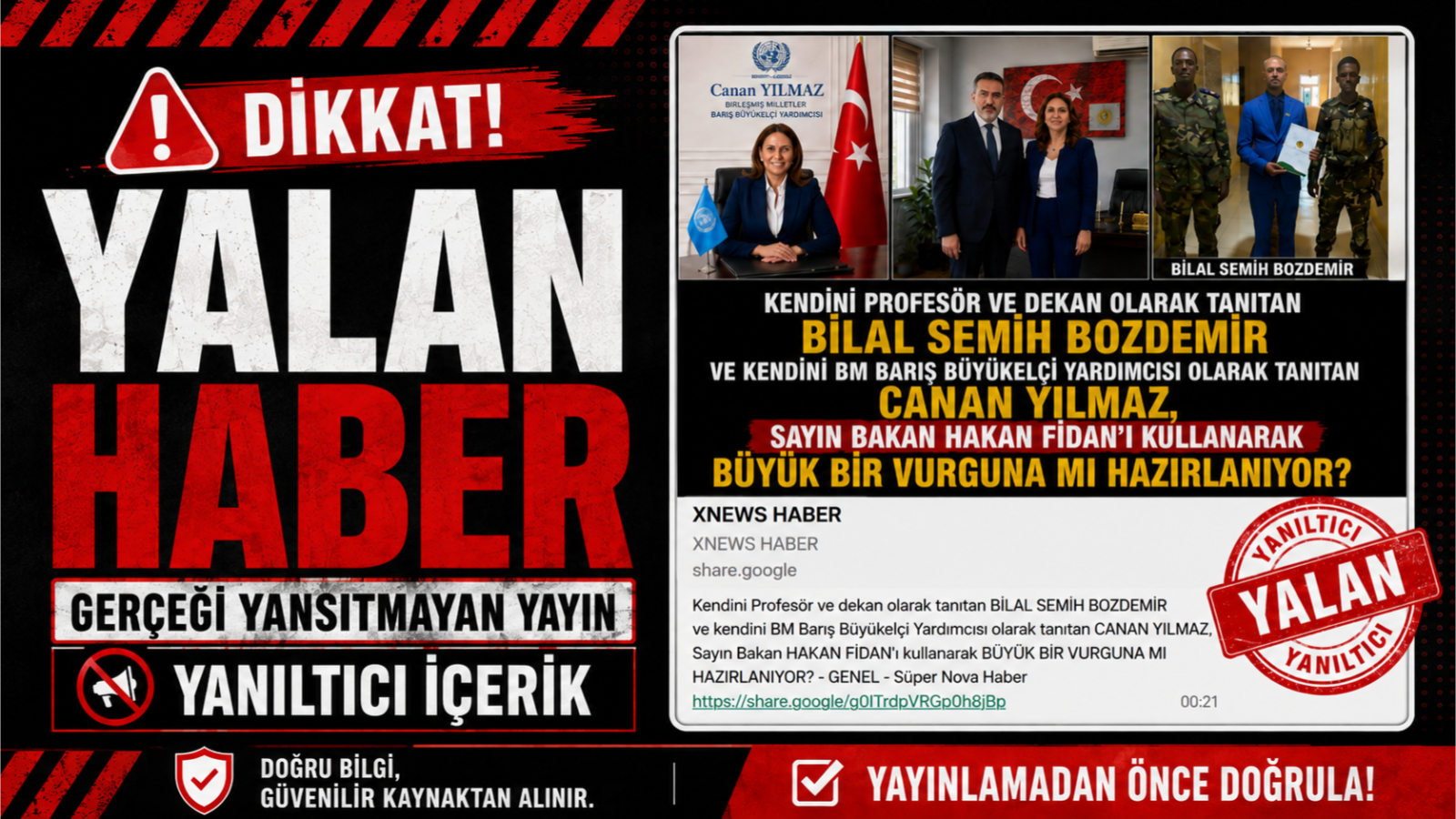
Document-based fact-check visual concerning claims about Prof. Dr. Bilal Semih Bozdemir and Canan Yılmaz

What do the institution’s current official pages say?

The official St Clements University Group website currently states, in its Turkish Institute section, “The Dean is Prof Dr Bilal Bozdemir.” Its Management Council lists “Prof Dr Bilal” as “President of Turkish Language Division.” The official St Clements University T&C page separately identifies “Campus Director — Dr. Bilal Semih Bozdemir” under the Turkish Centre.

Readers can perform the central check directly: St Clements University Group and St Clements University T&C.

Primary appointment records add historical context

A retained Certificate of Appointment records that Dr. Bilal Semih Bozdemir “has been appointed Dean of the St Clements University Campus – Turkey” and describes the position as directly responsible to the University Board for administration of Campus–Turkey. Separate records document an Assistant Professor of Psychology appointment dated 1 December 2012 and a Full Professor of Psychology appointment dated 20 March 2019.

The 2025–2026 record addresses continuity

An Authority Certificate effective 1 September 2025 identifies Bozdemir in the Turkish Institute structure as Authorizing Person / Dean and records specified operational functions. Communications dated 10 November 2025 from St Clements University President Dr. David Le Cornu confirm that the listed functions were functions Bozdemir performed. A 29 May 2026 Certificate of Appointment separately records his appointment as the University’s Representative in Turkey, while a 18 June 2026 Letter of Authority describes institutional, academic, administrative, verification and communication functions within a defined scope.

Scope matters: these records do not establish unlimited authority. They do not, by themselves, grant independent power to issue academic awards, transfer University assets, alter governance documents or create unrestricted financial liabilities.

Does the “major scam” implication carry evidence of comparable weight?

In the screenshot reviewed for this report, the serious criminal implication is not accompanied by a final court judgment, prosecutorial finding, official investigation result or comparably verifiable record. Framing a criminally suggestive headline as a question does not remove the reputational impact or the need for evidence.

Canan Yılmaz is not a target of this report

This report makes no criminal or adverse allegation against Canan Yılmaz. Prof. Dr. Bilal Semih Bozdemir has stated that he regards Yılmaz as an honest and trustworthy friend and makes no adverse allegation against her. The title attributed to Yılmaz in the circulating graphic is not independently endorsed here without an official source; however, a title-verification question is not evidence of fraud.

Hakan Fidan’s name does not establish a connection by itself

The material reviewed does not provide verifiable official documentation showing that the Turkish Foreign Minister participated in or endorsed the activity alleged in the headline, nor that his name was unlawfully used by the people named. The presence of a public official’s name in a headline is not proof of an institutional relationship.

Legal response has begun, but no final judgment is claimed

Bozdemir has stated that legal applications and responses have begun concerning publications he considers unlawful attacks on his personal, academic and professional reputation. That statement is not presented as a final judicial ruling against any publisher or person. Responsibility, if any, remains for competent authorities to determine after reviewing the evidence and the positions of all parties.

Privacy is part of responsible verification

Identity numbers, private addresses, student records, banking and payment details, personal contact information, handwritten signatures and private correspondence not necessary to the public-interest question are not published. Documentary accountability does not require unnecessary exposure of personal data.

Conclusion

The professor and dean descriptions have an institutional and documentary basis within St Clements University. By contrast, the circulated screenshot does not display evidence of comparable weight for its much more serious criminal implication. Responsible reporting should scrutinize credentials and power — but it should apply the same rigor before amplifying allegations of wrongdoing.